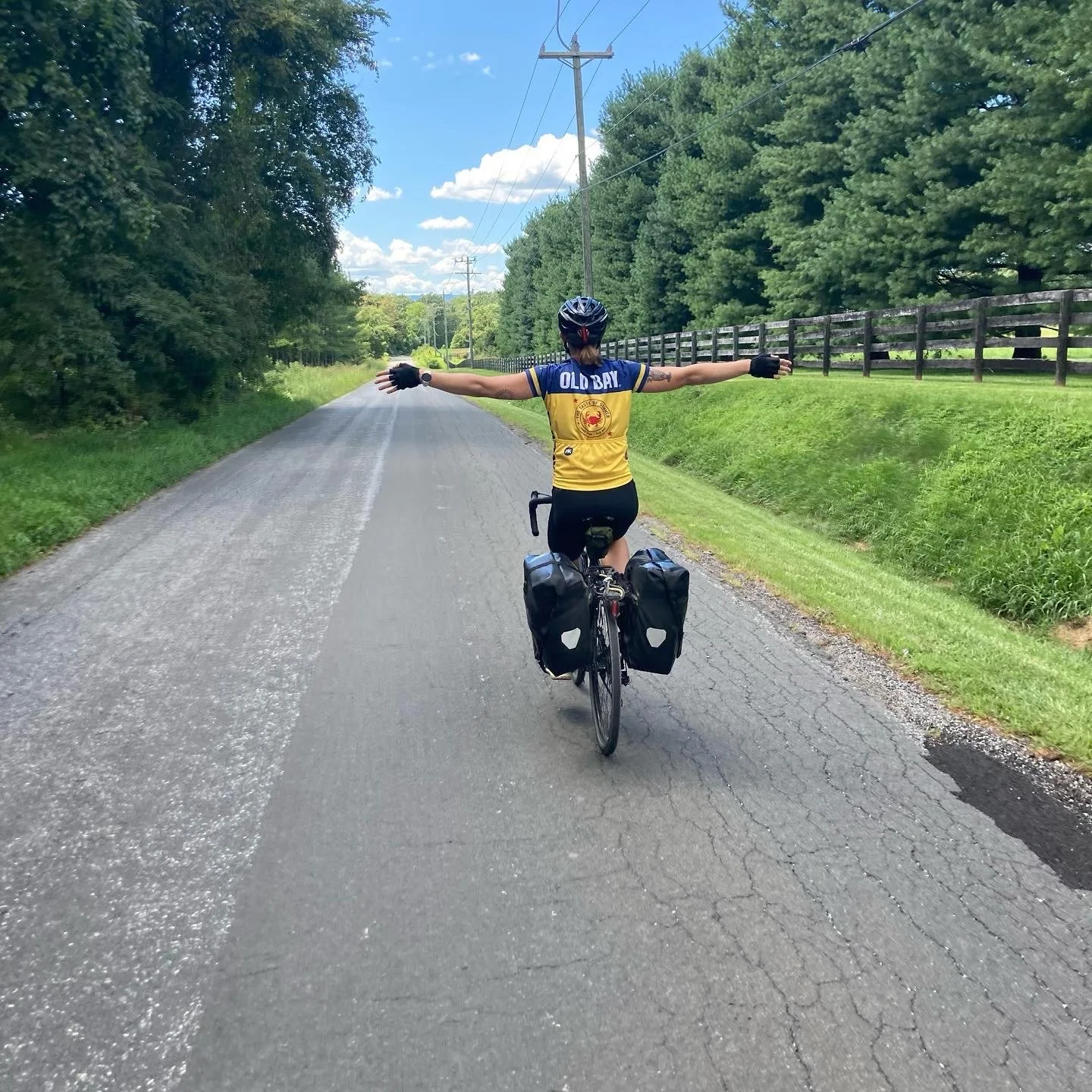
Bikepacking/Touring Workshop
a free workshop, directed by Claire and hosted at the bike shop she used to work at in January of 2025. You an watch the full video here:
WHO AM I? WHAT CREDENTIALS DO I HAVE TO TALK ABOUT THIS?
I’ve lived 1.5 non-consecutive years of my life on my bike.
ATL -> BAL in 2021 for 1.5 months
10 countries in Western EU + UK in 2021 for 4.5 months
Across the US from BAL -> SF in 2023 for 3 months
And New Zealand/part of Australia last winter (aka their summer)in 2023-2024 for 3 months
Many bikepacking trips in between all of this
I had biked for less than a full year before going on my first tour. I was as untrained as any beginner can be, but had a delusional sense of adventure and ambition. If I could do it, you can do it too
I currently lead bikepacking trips out of the DMV and more, educating and leading individuals into the sport and adventure of bikepacking. This is my career, my passion! You can find me on Instagram, YouTube, and Substack @livingbybike.
WHAT IS BIKEPACKING? WHAT MAKES IT DIFFERENT FROM BICYCLE TOURING?
Bikepacking is usually shorter in duration, more off the grid, and with a much lighter setup/rig. Often times bikepacking may be associated with a race.
Bike touring is usually more road-y and longer in duration. OFC these are not strict definitions, and you can mix the two/do as you like.
Ex. Biking across Europe, is mostly likely a “bike tour” since there are plenty of roads and paths to take.
Ex. Biking the Road to Freedom in Greenland is “bikepacking” since you’ll need a very tough bike as you are off-grid in the tundra for about a week.
Ex. Biking the Peruvian Great Divide is “bikepacking” since you’ll be off-grid and in the mountains for about a month.
Ex. Biking across the US is most likely a “bike tour” since you’ll mostly be on roads, albeit some rail trails such as the C&O Canal.
Please take this with a grain of salt. I only offer my personal definitions of these two words to help you understand the different mindsets you can have while on a trip and how that impacts how and what you pack.
BIKE PARTS/BIKE MODEL
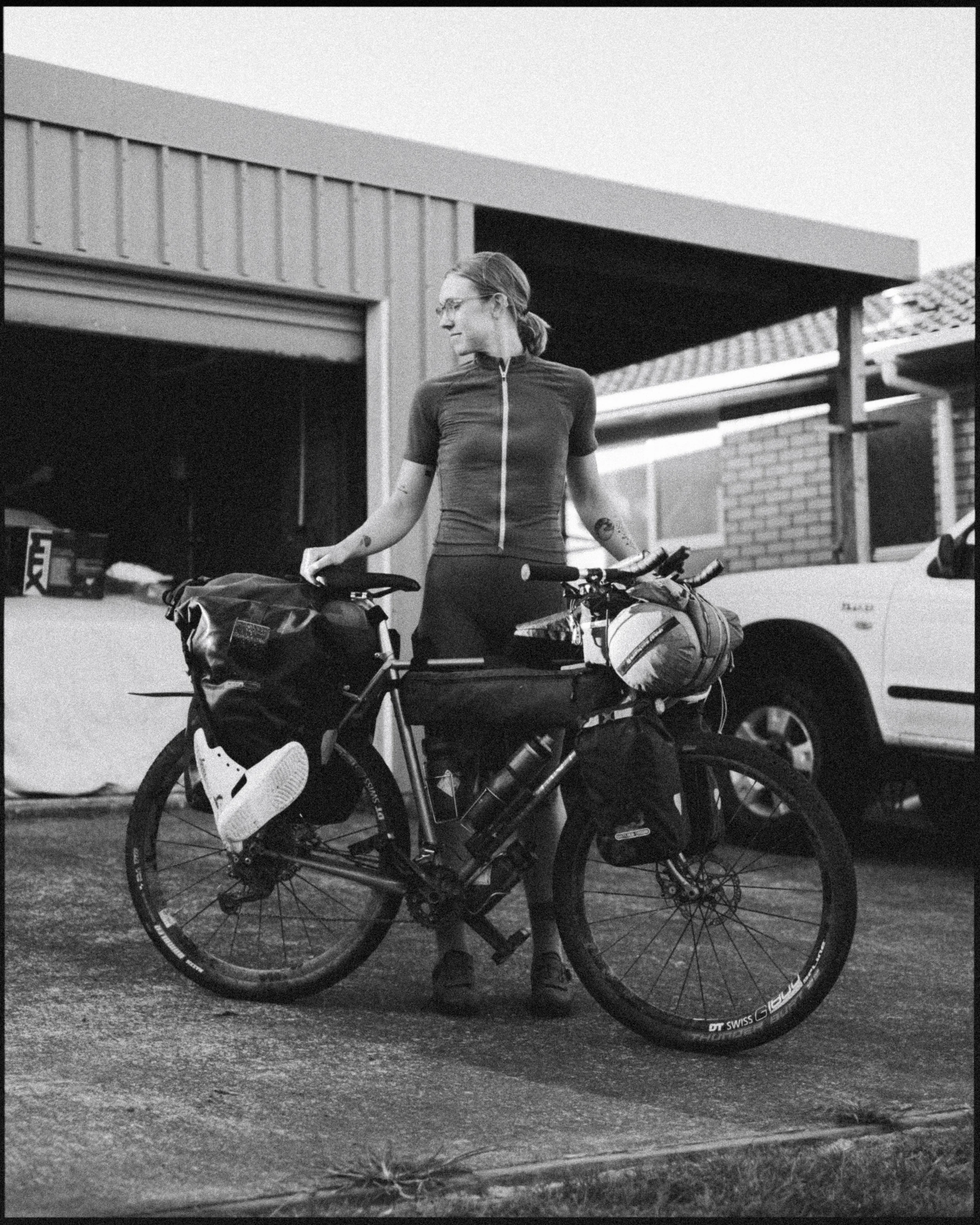
Shop around for a bike based on the type of adventuring you’d like to do. Do you like drop bars? Because that can make your back hurt after days on the saddle. Do you want a gravel bike? What does your local bike shop recommend? Talk to others, watch videos, and make an informed decision.
You can watch a video dissecting my New Zealand bike here as well
Or you can use your current bike depending on how many additions/changes you can make to it/if that is realistic for you
Easily customized aspects include handlebars, pedals, seat post/seat, tires, wheels, tube/tubeless setup, front/rear racks. You could replace your entire drivetrain if you need to, but at that point you might want to get a new bike (depending on costs, of course).
BAGS.
You’ll need a balance of weight in the front and the back (you don’t want to tip back on a steep climb or not have control of steering up front)
Just aiming to have two huge rear panniers will cause you to have difficulty finding things with ease and will also make you back heavy (which causes tipping on hills). More medium sized bags displaced around is best.
Racks do add weight but that’s not inherently a bad thing
Waterproof/water resistant is a must.
You need an accessible snack bag to stay properly fueled IMO. Or just use your jersey pockets.
You need to invest in reliable gear if you want things to workout easily on your trips. The cheaper, more obscure, and less thought out the gear you buy, the more likely you are to have problems down the road (literally).
Ex. if you buy bags which are not designed for gravel but you prefer gravel, you may endure bouncing bags which pop off your bike on a ride.
TOOLS/ACCESSORIES.
Crank Brothers (or any other kind of ultimate) multi tool is a must.
GPS is way better than a phone mount since they are much more resilient and reliable to all weather/use conditions. Better to save your phone battery and use it for other more important things.
Flat repair kit for tubed/tubeless setup
Bike lock, lights, kickstand? Your choice.
Camping supplies (not specified on this document since this workshop is about the bike aspect of touring, less so about the camping materials)
SHOES/PEDALS
Everything is to your personal preference. You have three options (SPD, hybrid, flat) (do NOT get SPD-SL!).
Clipping in has huge benefits for anatomical protection (aka, your knees!), security (no worrying about feet slipping off the pedal in the rain) and efficiency (you’ll get more power per pedal stroke).
I much prefer clipless since it keeps my knees healthy (after I got a professional bike fitting), makes me faster, and more secure while I’m biking.
MTB/gravel SPD shoes are ideal. They are better for walking. Pick whichever style suits you best. If you go this route, pick a second pair of shoes to wear off the bike. These could be Tevas, Crocs, Converse, whatever you like.
If you don’t plan to use clipless shoes/pedals, pick a pair of study shoes for cycling & pedals which have grips/teeth
CLOTHING.
Cycling/sport designed clothing is best IMO because it is designed for biking and will be very comfortable for that reason. Some people prefer regular cargo pants and a sporty shirt. At the end of the day, it’s whatever makes you the most comfortable on the bike for extended periods of time.
Cotton shirts are not your friend for cycling. Merino wool is supreme for versatility. o
Ex. Wardrobe for a 1-month bike tour
ON THE BIKE
2 cycling kits (bibs, jerseys, gloves, socks)
Sunglasses
Self-packing rain jacket
Arm/leg warmers OR long sleeve sun top
Self-packing warm jacket
Clipless gravel shoes
OFF THE BIKE
2 casual/nice shirts
Convertible pants
Pajamas
Sandals
Hat
Undergarments (merino wool is best for moisture wicking properties)
Something fun? Live your best life.
NUTRITION.
You need to balance things that are nutritionally good for you with things you actually enjoy. If you don’t like what you eat, and it’s not easy to grab and go, you won’t eat enough, and your performance will suffer.
Carbs > protein > fat
Your bags should only be 80% full when you finish packing all your gear. The rest of the space is for the food you will pack, and things you pick up along the way (ex. Souvenirs)
Ex. Food to pack for 2-days in a trip:
5 gels/granola bars/a bag of scratch
Quick cooking oatmeal
Bananas
Instant coffee
Your favorite salty snacks
Half loaf of bread, bottle of honey/raisins, plastic jar of peanut butter
Quick cooking rice/bean packets, canned soup, backpackers pantry meal, quick cook mac & cheese, whatever you like!
Stop at a local cafe for a meal one day
BIKE MAINTENANCE TO KNOW:
How to fix a flat (whether you have tubed or tubeless tires)
Go to a fix-a-flat clinic
Getting ready (lube chain, tighten down bolts, check tires etc.)
How to tighten/adjust your brakes
How often to lube your chain (bring a spare rag if you can for wiping it down)
Cleaning while on the trail (using your water bottle, a toothbrush, someones hose etc.)
How to assemble your bike (if you are flying)
Cleaning when you get home (do this immediately!)
HOW TO PLAN FOR YOUR TRIP/SKILLS YOU NEED TO KNOW.
Water- how much do you need/how do you want to carry it?
Type of terrain you will be traveling on- how remote will you be?
Preparing for/navigating new types of terrain and cultures- adaptability • Reviewing your route ahead of time/downloading an off maps version
Where to sleep (warmshowers.org, couchsurfing, hotels, hostelworld.com, camping, wild camping, crashing with friends, finding hosts on FB/Instagram etc.)
GREAT INTRO ROUTES
Examples of trips you can do (assuming you’re based in Baltimore/the DMV area)
C&O Canal (take Amtrak to Cumberland or Marc to Harpers Ferry)
Camping/hotels
Smooth gravel trail
Baltimore -> Annapolis, Annapolis -> D.C
Hotels
Roads/paved trails
Camping
Gravel trails, county roads, singletrack
Where to find more routes
Bikepacking.org
Bikepackingroots.org
Reddit/YouTube/Facebook (look up groups titles like “bikepacking Houston”)
THERE IS NO WRONG WAY TO ADVENTURE, BUT THERE ARE BETTER WAYS TO PREPARE & SETUP FOR SUCCESS!